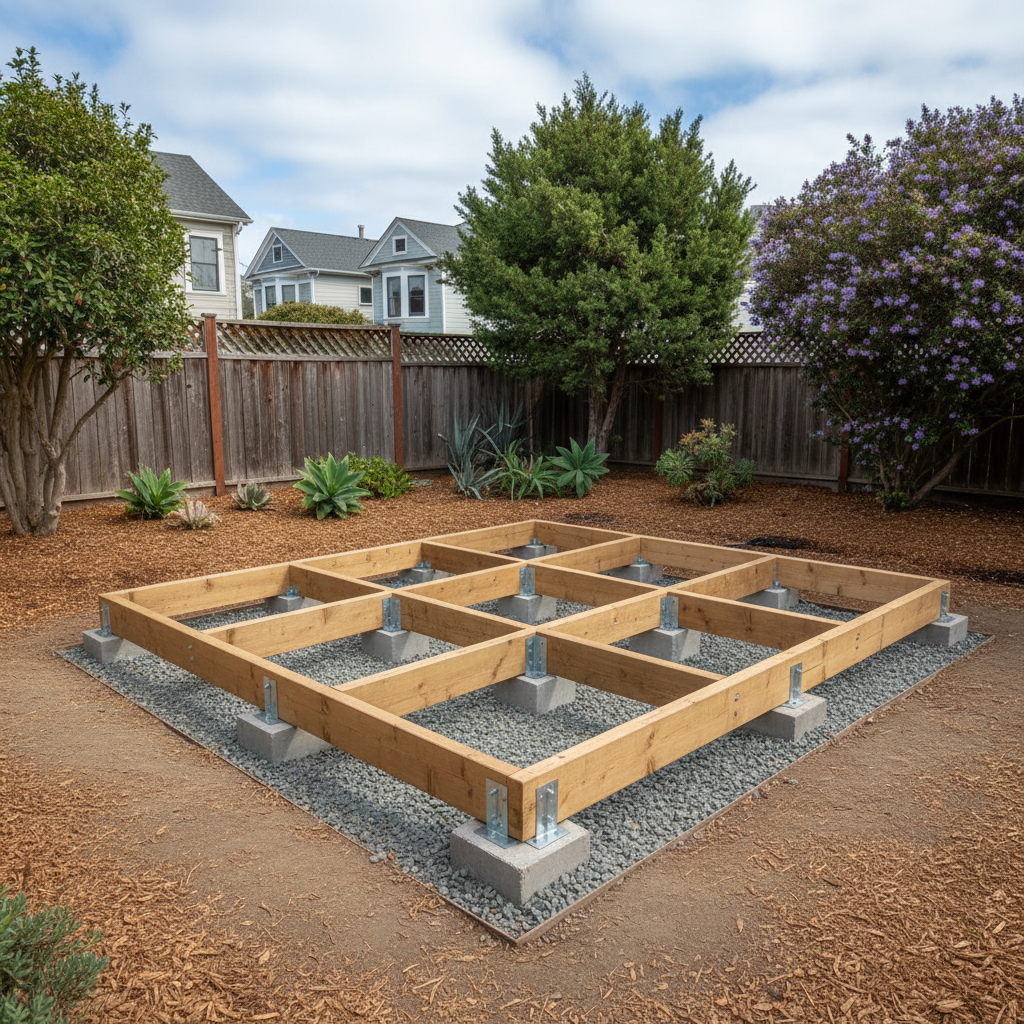
Alright, let's talk shed foundations. This isn't the glamorous part of getting a new shed, I know, but it's probably the most important. You could have the prettiest shed in the world, but if it's sitting on a shaky foundation, you're just asking for trouble later on. I’ve seen enough warped doors, cracked walls, and leaning structures around here to tell you: don't mess this up. Here are the biggest blunders I see San Francisco homeowners make when they're planning or hiring for shed foundation work.
Ignoring the Ground Beneath Your Feet
This is number one, hands down. People get all excited about the shed itself and completely forget to look at what it's actually going to sit on. San Francisco's got all sorts of soil conditions, from sandy fill near the bay to dense clay in the Sunset, and even some areas with old rubble from the '06 quake. You can't just plop a shed down on whatever's there and expect it to be fine.
- Not doing a proper site assessment: Is your yard sloped? Is there existing concrete or asphalt? Are there tree roots? Does the ground get soft and squishy after a rain? All these things matter. You might need to level the area, clear out debris, or even bring in fill material to create a stable base.
- Assuming all soil is the same: Clay expands when wet and shrinks when dry, which can cause significant movement. Sandy soil drains well but can shift. You need to know what you're dealing with. A good contractor, like us at San Francisco Shed Builders, will always check your specific site conditions before recommending a foundation type.
- Forgetting about drainage: Water is the enemy of any foundation. If your site doesn't drain well, water will sit around your foundation, leading to rot, mold, and eventual structural failure. You might need to regrade the area or install French drains around the shed.
Picking the Wrong Foundation Type for the Job
There isn't a one-size-fits-all shed foundation. What works for a small garden shed on flat ground won't work for a heavy workshop on a slope. I see folks trying to cut corners here, and it always bites them.
- Using concrete blocks directly on the ground: This is a classic DIY mistake. Unless you're talking about a tiny, lightweight plastic shed, just stacking concrete blocks on uneven, unprepared soil is a recipe for disaster. They'll shift, sink, and your shed will be crooked in no time.
- Underestimating weight: Are you storing gardening tools or a motorcycle? A few boxes or a full woodworking shop? The heavier the contents, the more robust your foundation needs to be. A simple gravel base might be fine for a small storage shed, but a larger, heavier structure often needs a concrete slab or a pier and beam system.
- Not considering local codes: San Francisco has specific building codes, even for sheds. Depending on the size and type of shed, you might need permits, and that often means your foundation needs to meet certain structural requirements. Don't assume you can just build whatever you want.
Hiring the Cheapest Guy (or Doing it Yourself Without Research)
Look, I get it. Everyone wants to save a buck. But foundation work is not the place to skimp. This is where the structural integrity of your entire shed comes from. If you hire someone who doesn't know what they're doing, or you tackle it yourself without proper knowledge, you're setting yourself up for expensive repairs later.
- Ignoring references and reviews: A contractor who rushes through the foundation work is a red flag. Ask for references, check their past work, and make sure they understand the nuances of working in San Francisco's unique environment.
- Not getting a detailed quote: A good quote will break down the costs for site prep, materials, labor, and any necessary permits. If it's just a lump sum with no details, be wary. You need to know exactly what you're paying for.
- Assuming DIY is always cheaper: For a small, simple shed, maybe. But for anything substantial, factor in the cost of tools, materials, your time, and the potential for mistakes. Sometimes, paying a professional to do it right the first time actually saves you money in the long run.
- Forgetting about rebar: If you're pouring a concrete slab, rebar isn't optional; it's essential for strength and preventing cracking, especially with our occasional seismic activity. A contractor who skips this is cutting a dangerous corner.
Your shed foundation isn't just a slab of concrete or a few blocks; it's the anchor for your entire investment. Take the time to plan it right, understand your site, and don't be afraid to ask questions. A solid foundation means your shed will stand strong through our famous fog, the occasional downpour, and whatever else San Francisco throws at it for years to come. Do it right once, and you won't have to worry about it again.